
How to Price Your Product for the Korean Market (2026): Landed Cost Guide for Indian Exporters
Korean buyers compare landed KRW prices, not ex-factory rupee prices. This guide gives you the exact landed-cost formula, the Korean duty and VAT inputs, hidden costs exporters forget, and two worked examples you can copy into a spreadsheet.
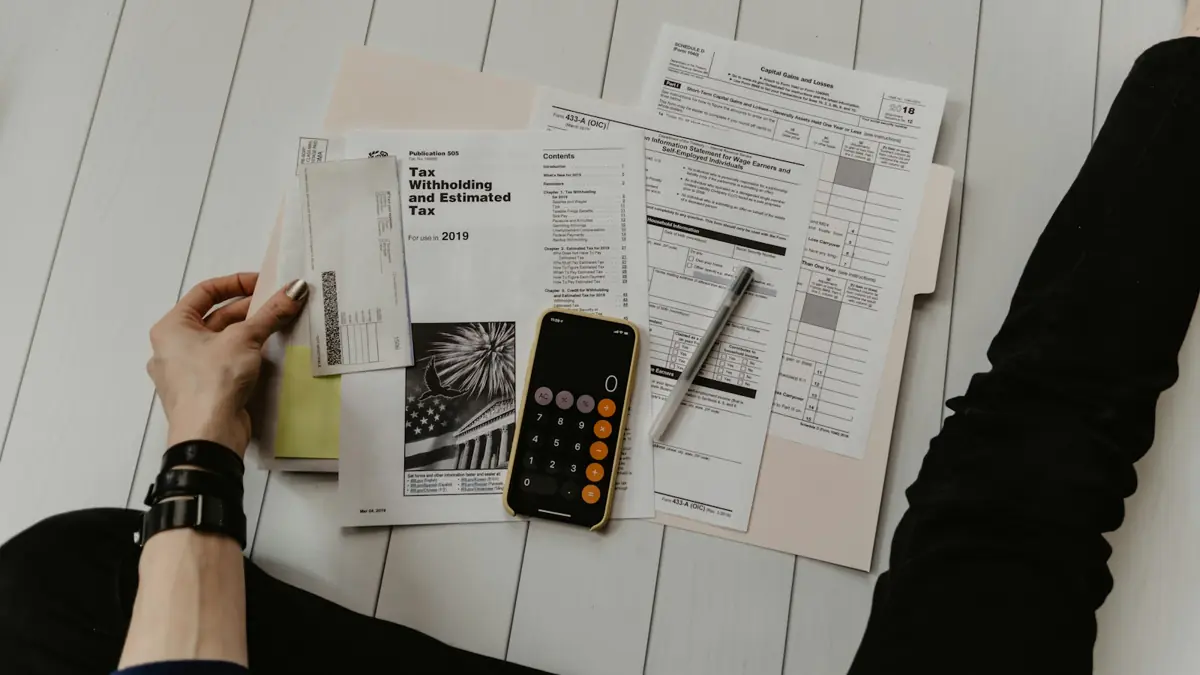
Key takeaways
- Landed cost = product cost + Indian export handling + international freight + insurance + Korean duty (on CIF) + 10% VAT (on CIF + duty) + clearance + Korean last-mile.
- Korean duty is 0–13% MFN and 0–5% for most Indian goods under CEPA — the Certificate of Origin is worth 5–8 points of margin.
- Chargeable weight (higher of actual vs volumetric) drives freight; compact packing can cut landed cost more than negotiating product price.
- ShipKorea's DDP rate (₹609/kg at 21 kg+) already bundles freight, clearance, duty and VAT — one line in your model instead of six.
Quick answer
Landed cost for the Korean market is everything it takes to put one unit in the buyer's hands in Korea: product cost, export handling, freight, insurance, Korean duty, 10% VAT, clearance and delivery — then add marketplace fees and margin to get the selling price in KRW. Korean B2B buyers expect a DDP landed price; ShipKorea.in's all-inclusive per-kg rate collapses freight, duty, VAT and clearance into one predictable line.
The landed-cost formula
Landed cost per unit = (Product cost + Packaging + Indian export handling + International freight + Insurance) + Korean duty + Korean VAT + Korean clearance fee + Korean domestic delivery, all divided by units. Korean duty is assessed on the CIF value (goods + freight + insurance to Korea). VAT (10%) is assessed on CIF + duty. Convert to KRW at a conservative rate (e.g. ₹1 ≈ ₩16–17, check the day's rate) and keep a 3–5% FX buffer.
Input 1 — chargeable weight and freight
Freight is charged on the higher of actual weight and volumetric weight (L×W×H cm ÷ 5000). A 30×30×30 cm box of 60 spice tins weighing 9 kg has volumetric weight 5.4 kg — bills 9 kg. A 60×40×40 cm box of cushion covers weighing 8 kg bills 19.2 kg. At ₹609/kg that is ₹5,481 vs ₹11,693 — packing density is a pricing lever. Our volumetric weight guide shows how to cut it.
Input 2 — Korean duty: MFN vs CEPA
Korea's MFN duty on most Indian export lines is 8% (spices, leather, handicrafts, brassware), 13% (garments, many home textiles), 0–8% (engineering parts), and much higher on protected agri lines like tea and rice. With an India–Korea CEPA Certificate of Origin most lines fall to 0–5%. On a ₹2,00,000 CIF shipment, moving from 13% to 5% saves ₹16,000 — plus the VAT on that duty. Always model both and get the CoO; see India–Korea CEPA explained.
Input 3 — Korean VAT, clearance and last mile
VAT is 10% on (CIF + duty). It is a cost for consumers and non-registered buyers; VAT-registered Korean businesses reclaim it, so for B2B you may present price 'excl. VAT' with VAT shown. Customs brokerage in Korea runs ₩30,000–₩60,000 per entry for standalone shipments; domestic courier delivery ₩3,000–₩6,000 per parcel; warehouse handling ₩500–₩1,500 per unit. Under our DDP service, clearance, duty, VAT and delivery are already inside the per-kg rate.
Worked example A — B2B: 100 kg block-print bedsheets to a Seoul interior brand
Product cost ₹1,20,000 (200 pcs × ₹600). Packaging/export handling ₹4,000. DDP freight + duty + VAT + delivery with ShipKorea at ₹609/kg × 100 = ₹60,900 (assumes CEPA CoO; actual duty inside varies by line). Landed cost ≈ ₹1,84,900 → ₹925/pc ≈ ₩15,700/pc. Sell to the brand at ₩24,000/pc DDP (35% margin) — they retail at ₩49,000. Without CEPA, add roughly 8% duty on CIF (~₹14,000) and VAT on it — margin drops to ~29%.
Worked example B — marketplace: 200 g masala gift tin on Coupang
Product ₹180, tin/packaging ₹40, Korean label ₹8. Chargeable weight 0.3 kg → DDP freight/duty/VAT share ₹183 (₹609/kg). Landed ≈ ₹411 ≈ ₩6,800. Coupang commission ~12% of ₩19,900 = ₩2,400; domestic delivery ₩3,500; ads/returns reserve ₩1,500. Net ≈ ₩5,700 (~₹340) per unit at a ₩19,900 price — but only if stock is imported in consolidated 21 kg+ lots. See selling on Coupang from India.
Hidden costs exporters forget
CEPA CoO fee per shipment (₹200–₹800); MFDS lab testing on first food/cosmetics imports (₩150,000–₩500,000, borne by importer); KC certification for electricals and children's products; Korean label design and translation; payment/FX charges on inward remittance (0.5–1%); returns in marketplaces (3–5%); insurance (0.5–1% of value); and volumetric re-measurement at pickup if your box dimensions were guessed. Build a 5% contingency line into every quote.
Build your calculator
Columns: units, product cost, packaging, export handling, chargeable kg, DDP rate/kg (or split freight/duty/VAT if not DDP), insurance, Korean fees, FX rate, landed INR, landed KRW, target margin, DDP price KRW, marketplace fee, net margin. Send us the SKU list and dimensions on WhatsApp and we return the DDP line with the exact CEPA duty rate applied — see also pricing and commercial shipping.